
2016, Jun-
Work created as a response to a Michael Asher exhibition at Kunstraum Wien, 1996
Sophie Hammer & Billie Meskens For an exhibition at “Raum D“, Museumsquartier Wien our attempt was to deal with the history of the architecture of the space - specifically to tackle the elephant in the room - the big white, strangely shaped construction hovering on columns, taking up half the height of the space. The simple presence of the architectural constructions talk about their intentions as well as their failures, aesthetic ideas representing a certain feeling of a time; as do the texts describing the intended purpose of the constructions; the languages used in texts are markers of a certain zeitgeist as much as the remains of the architectural ideas present in the space. The texts, articles and images dealing with the designs, redesigns and renovations of the space from the early 90s to now, have some similarities and conflicts within them - there is always the strive for a certain openness in terms of usability - the ARTEC design is meant to function as a machine in a 60s utopian sense, adaptable to the needs of artists - the PPAG design from 2003 has a futuristic utopian note of openness and transparency. Both attempts admit to having to give up on these ideas - ARTECs moveable mdf walls were painted white to become more of a white cube by the first artist shown, and then left white; PPAGs futurist open construction had to be closed off with fences to avoid theft, the office built in floating, hovering inside Raum D is now storage space. Certain times inspire certain characters, actors or players to appear on the stage; like the figure of the Bundeskurator provided with money from the state to revamp the viennese art scene (in the 90s); Fischer von Erlach being commissioned by the emperor to build a representative building for the horses of the national guard; an architecture firm winning the official competition for a redesign in 2003; a flexible exhibition architecture that is then reused in a different space as a bar; these characters form the narratives of state culture (including state money) as an idea, an imaginary underlying common shared, used, interpreted, worked on, rejected and at the same loved and cherished, recognized despite its merely representational character as the one thing that keeps things from falling apart, as is so accurately described in Joseph Roths novel Radetzkymarch.№5/11
№ 1/1
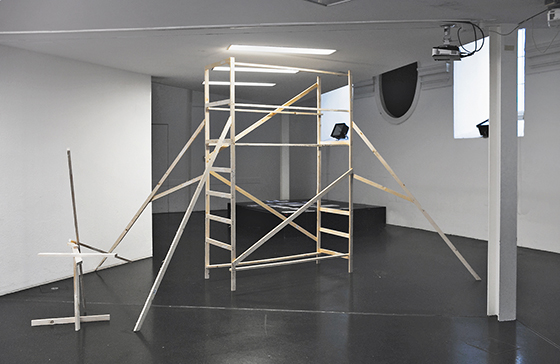 photo credits: Marzena Wolowicz
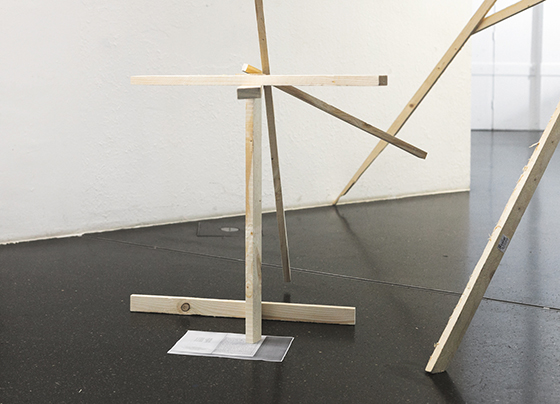 photo credits: Marzena Wolowicz
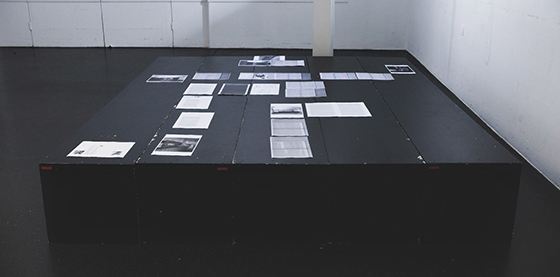 photo credits: Marzena Wolowicz
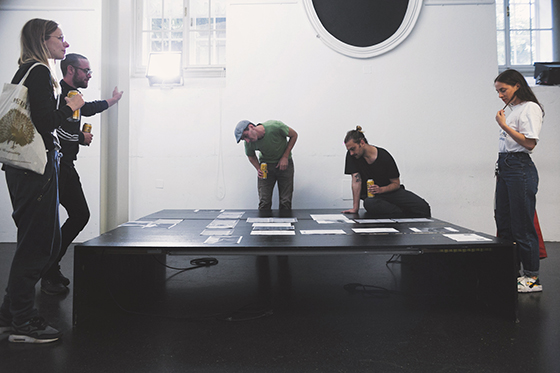 photo credits: Marzena Wolowicz